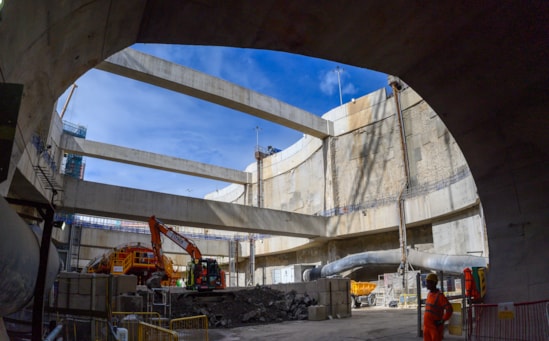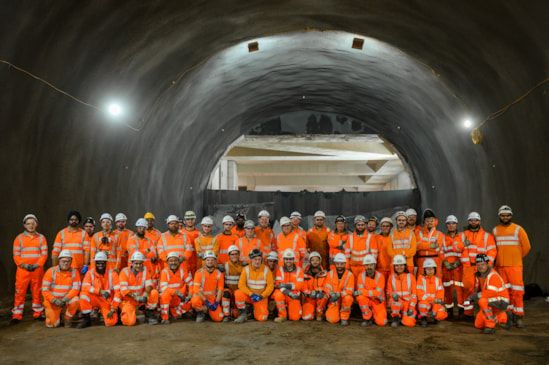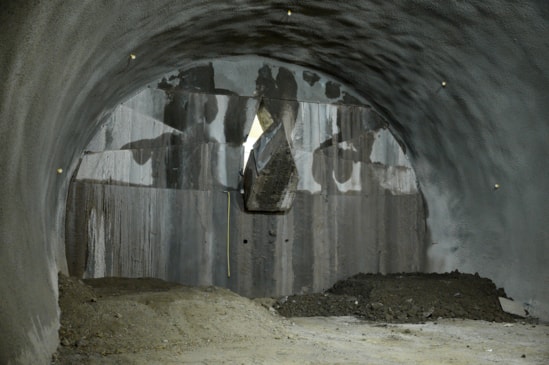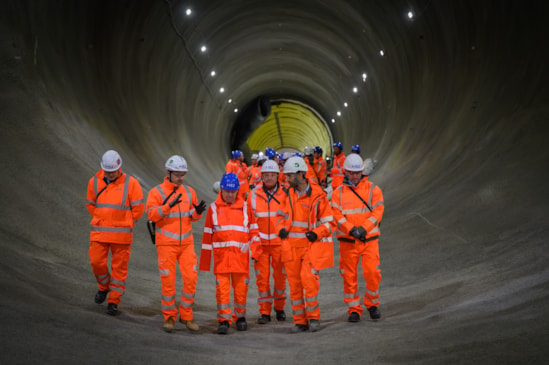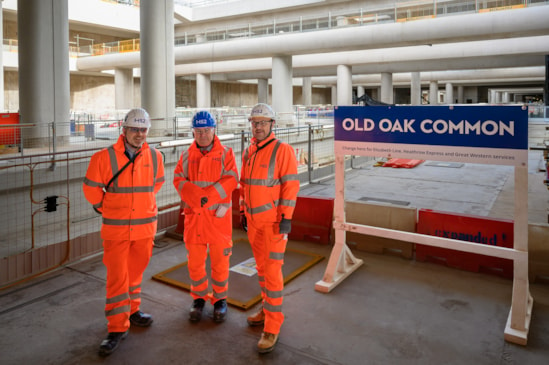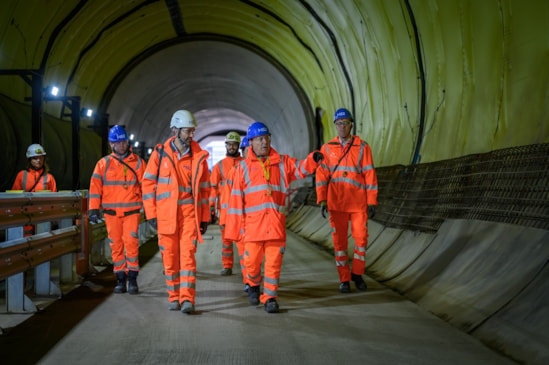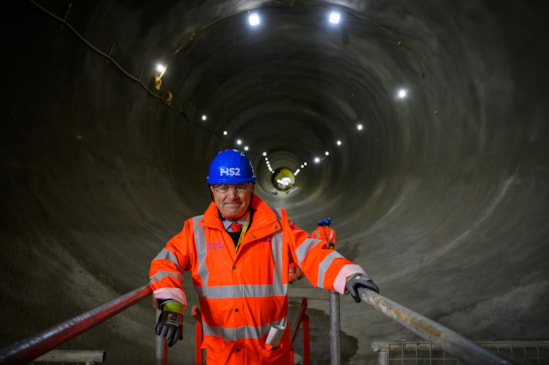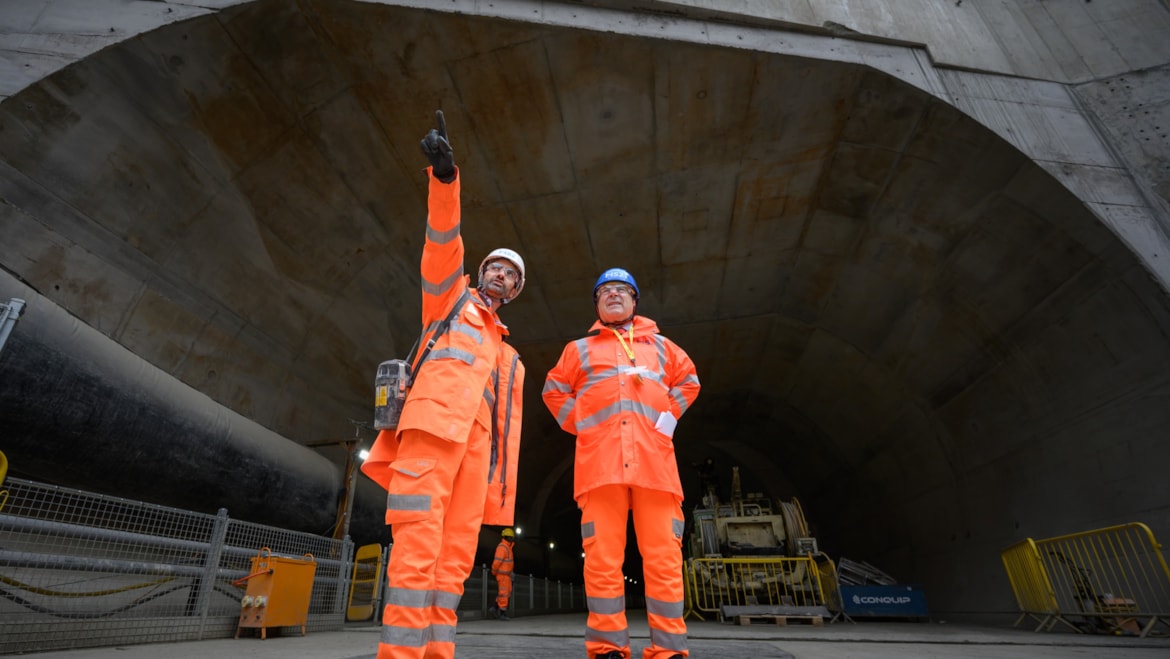
Delivery of Britain’s new high-speed railway has taken another significant step forward after tunnel mining teams broke through into HS2’s Old Oak Common station box, following excavation of 100,000 tonnes of material - roughly the weight of 14,000 double-decker London buses.
The achievement links what will be London’s first HS2 station with the railway beyond. Once trains start running passengers will be able to travel around 140 miles from the hub to the line’s new station at Birmingham Curzon Street in around 45 minutes, with the railway more than doubling peak-time seat capacity between London and Birmingham.
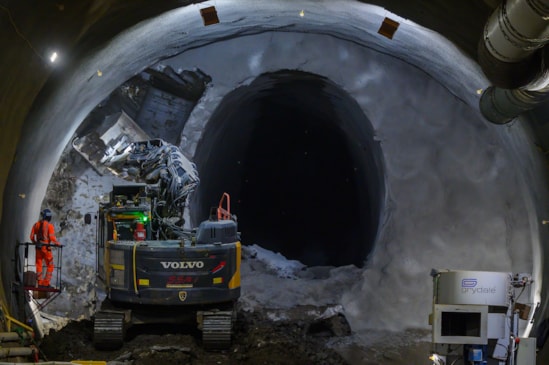
Work on the tunnels began from HS2’s Victoria Road crossover box site in May 2024. Unlike HS2’s other excavated tunnels, which have predominantly been built using huge tunnel boring machines, the two 360metre long sections have been mined entirely through London clay using tunnel excavators and lined with 30,000m3 of sprayed concrete.
The breakthrough follows significant progress across the project, with all deep bore tunnelling between London and Birmingham now complete, and more than 80% of major structures are under construction or complete. In 2025/26 HS2 Ltd delivered more than 10% more construction than planned and achieved six major milestones ahead of schedule.
Old Oak Common will be one of the best-connected rail hubs in the country where the high-speed line, Great Western railway, Elizabeth line, and Heathrow Express will all converge, connecting communities and businesses to new opportunities across London, the West Midlands and beyond.
The Rail Minister, Lord Hendy, said:
“This is a major milestone for HS2, bringing us a step closer to delivering a world-class transport hub at Old Oak Common and connecting London to Britain’s new high-speed railway.
“HS2 will provide much-needed rail capacity, create space for more reliable services across the wider network and help unlock economic growth, homes and jobs in west London, the West Midlands and beyond.”
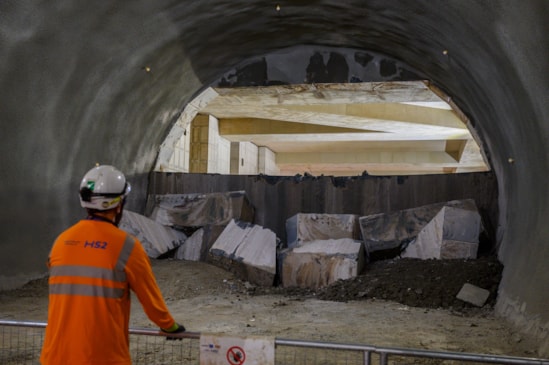
The breakthrough into the station box – and that of the northbound tunnel on 13 October – used a process not previously employed on HS2. The tunnel’s dividing wall was cut into blocks and pushed out, Jenga-style, from the station side back into the completed tunnel behind.
HS2 Ltd chief executive Mark Wild said:
“I pay tribute to all those who achieved, and safely delivered, the breakthrough into the Old Oak Common station box. This is a key milestone for the HS2 programme and helps bring us a step closer to achieving our challenging ambition of delivering the railway from Old Oak Common to Birmingham Curzon Street by 2037, or earlier.
“We are now in the final stages of a fundamental reset of the entire HS2 programme to deliver the line safely and efficiently between London the West Midlands at the lowest reasonable cost. The prize of our endeavour will be a new high-speed railway for the Great British Railways network, delivering much needed capacity and driving local regeneration. The new HS2 station at Old Oak Common is set to boost the local economy by £10 billion over the next decade.”
Construction method was driven by the tunnels’ engineering specification, which sees their width narrow from two tracks to one between the crossover box and station. All of the 100,000 tonnes of excavated material generated by the project has been taken to reuse projects in the UK.
The tunnels have been mined using excavators and then lined with sprayed concrete before being lined by cast in situ concrete using travelling formwork. The breakthroughs have created an 8.8-mile link between Old Oak Common station and its West Ruislip tunnel portal on the capital’s north western periphery.
Skanska Costain STRABAG Operations Managing Director David Hannon said:
"Our breakthrough into the Old Oak Common station box is a significant milestone for the project.
“This achievement is a credit to the teamwork and dedication of everyone involved, from those working deep underground to those supporting on the surface. We will continue to deliver our work with safety and productivity at the heart of everything we do.”
Separately, the two massive tunnel boring machines that were launched from the eastern end of the Old Oak Common station box at the start of 2026 are continuing their 4.5-mile journeys towards HS2’s future central London terminus at Euston. They are expected to arrive at their destination in mid-2027.
ENDS